

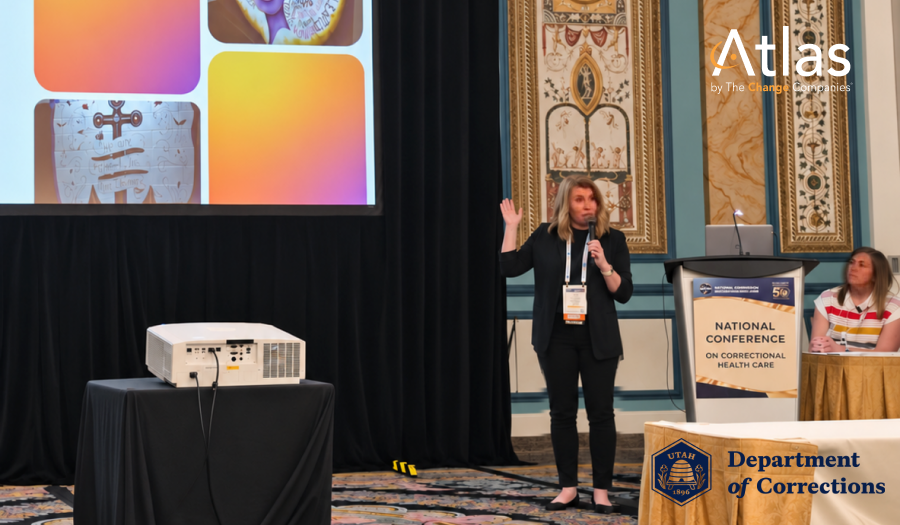
At the 2026 NCCHC Conference, the Utah Department of Corrections and The Change Companies shared how self-directed digital programming is helping overcome logistical barriers to treatment in secure housing environments.
What happens when the need for behavioral health programming is clear, but the logistics of delivering it make traditional approaches difficult? For correctional agencies, providing meaningful treatment in restrictive housing presents a unique challenge. Security requirements, limited staffing and the complexities of moving individuals safely throughout a facility can make even a single hour of programming difficult to deliver.
But what if individuals could access evidence-based programming without ever leaving their housing units?
At the National Commission on Correctional Health Care (NCCHC) Conference in Las Vegas, Randi Peterson, Director of Institutional Substance Use Treatment Programming at the Utah Department of Corrections (UDC), and Valerie Bagley, Chief Program Officer at The Change Companies, shared lessons from a collaborative pilot using the Atlas digital platform to bring self-directed treatment to individuals in secure housing.
Their presentation, Digital Treatment Delivery in Secure Housing: A Collaborative Pilot with Utah Department of Corrections, explored how the program was implemented, what staff and residents are experiencing, and what the results may mean for the future of correctional treatment.
The challenge: When traditional treatment delivery isn't practical
For individuals in restrictive housing, accessing treatment isn't as simple as attending a scheduled class. Randi explained that individuals in Utah's restrictive or structured housing units may be subject to additional security requirements that make participation in conventional classroom-based programming difficult. Moving a resident to a classroom may require restraints, multiple security escorts and additional supervision throughout the session. Bringing several individuals together for a group intervention adds even more complexity. As Randi described, a 60-minute class could easily become a two- or three-hour operation once transportation, restraints, security procedures and return escorts were factored in.
Staffing presented another challenge. Security officers were needed to facilitate movement and maintain safety, while treatment facilitators sometimes found the environment uncomfortable or intimidating. When staffing shortages occurred, programming was often among the first activities canceled. The result was a significant gap between the availability of evidence-based treatment and the ability to deliver it consistently within secure housing environments.
UDC needed a different approach — one that could work within the operational realities of a correctional facility without sacrificing the quality or individualization of treatment.

A different approach: Bringing treatment directly to residents
In partnership with The Change Companies, UDC began piloting Atlas, a digital platform delivering evidence-based Interactive Journaling®curricula.
Interactive Journaling® combines principles of motivational interviewing, cognitive behavioral therapy and the stages of change model to help individuals examine their thoughts, identify patterns and develop practical behavior change strategies.
Rather than requiring participants to attend scheduled groups, Atlas allows them to engage with programming independently, at their own pace, through digital devices.
The Utah pilot was designed around several essential requirements:
-
Risk-need-responsivity: Programming could be aligned with individual criminogenic risk and need factors, including substance use, criminal thinking, relationships and self-regulation.
-
Self-directed engagement: Residents could work through meaningful activities without the logistical challenges of attending in-person classes.
-
Staff visibility: Flags, engagement reports and progress summaries could help staff identify concerning responses, disengagement or opportunities for follow-up.
-
Structured pacing: Programs could be scheduled to release content gradually, encouraging reflection rather than rushing through assignments.
-
Accessibility: Read-aloud functionality and Spanish-language content could help reduce barriers to participation.
Importantly, the approach was not intended to eliminate the human component of treatment. Instead, it created a way for individuals to begin meaningful work independently while allowing staff to focus their limited time on guidance, feedback and individualized support.
The results: Nearly 10,000 sessions in 11 months
UDC expanded from a small pilot to making Atlas available throughout its structured housing unit at its Salt Lake City correctional facility. Within one year, the program had generated substantial engagement.
11-month engagement results | October 2025–September 2026
|
Measure |
Result |
|
Participants |
296 |
|
Total hours engaged |
1,340 |
|
Total Atlas sessions |
9,790 |
|
Activated participants who engaged |
98% |
Popular topics included:
-
Rational thinking and cognitive behavioral skills
-
Prosocial recreation
-
Family relationships
-
Self-control
-
Personal health
-
Making positive use of time spent in restrictive housing
In addition to in-app insights, UDC staff have begun noticing changes in how participating residents spend their time, interact with others and think about their futures. According to staff, Atlas provides a constructive activity that reduces idle time and provides residents with opportunities to develop new skills.
Security and reentry staff reported that residents actively participating in Atlas appeared to engage in fewer negative behaviors and disciplinary issues. Staff also noticed a shift in participants' outlook. As residents completed more Interactive Journals, some appeared increasingly optimistic about their eventual release.
Human connection still matters
While residents appreciated being able to complete Journals at their own pace, they also wanted staff to review their responses, acknowledge their progress and provide feedback. Staff found that the platform made it relatively easy to review Journal responses and provide individualized encouragement. Progress summaries and flags helped staff identify opportunities for follow-up without having to manually review every response.
Although Journals could be assigned based on assessed risk factors, participants appreciated the opportunity to explore topics that were personally meaningful to them.
The pilot was designed to reduce the logistical demands of group treatment, but staff also observed the value of peer interaction. Staff observed that engagement and internalization of concepts appeared stronger when residents had access to others who were also participating in the Journals.
The experience underscored a broader lesson: Digital treatment can make programming accessible, but human relationships can help deepen its impact.
Lessons learned: Practical strategies for correctional agencies
The Utah pilot also revealed several practical lessons for correctional agencies considering similar approaches.
1. Frontline champions make implementation sustainable.
UDC identified the importance of having staff members who understood the platform, supported their colleagues and served as internal resources for troubleshooting and training. These champions helped other staff recognize the value of the program, identify time-saving features and maintain momentum.
2. Security staff support increases engagement.
Because programming takes place in the housing unit, security personnel play an important role in encouraging participation and supporting consistent access. The pilot reinforced the importance of engaging security staff early and helping them understand how programming contributes to broader institutional goals.
3. Integration with existing systems creates continuity.
UDC identified the value of connecting Atlas participation with milestones in its Offender Management System (OMS). This provides greater visibility into residents' progress and supports coordination among staff involved in treatment, case management and release planning. Rather than existing as a standalone initiative, digital programming can become part of the broader correctional case management process.
4. Staff value tools that make their work easier.
Staff particularly valued engagement reports, progress summaries and the ability to review and respond to individual Journal entries. Flags also helped identify responses requiring attention and prioritize staff follow-up.
These experiences reinforced the importance of using technology to support staff judgment rather than replace it.
Rethinking treatment delivery in secure housing
The Utah experience offers an important lesson for correctional healthcare and programming leaders: The logistical barriers to delivering treatment in restrictive housing are substantial, but new delivery models can help overcome them. By combining self-directed digital programming with individualized content, staff oversight and thoughtful implementation, UDC has created new opportunities for individuals to engage in meaningful behavior change work.
Bring self-directed programming to your secure housing units. Request an Atlas demo → Book a quick Atlas demo
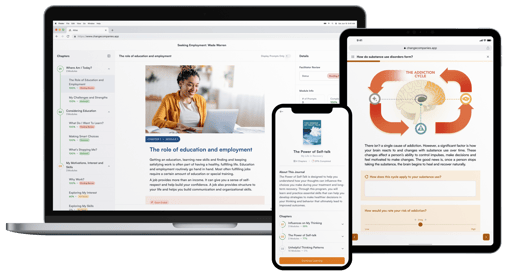
Evidence-based, behavioral health Interactive Journaling® curricula are available digitally on Atlas. Atlas can save staff time while supporting fidelity to evidence-based practices.
Ready to see what Atlas can do for your program? Visit our website to schedule a personalized demo today. Learn more about Atlas →
Provide your information below for a complete overview of Atlas for your setting.