

For jail program administrators, the challenge is familiar: more people need programming than there are staff, classroom seats or hours in the day to provide it.
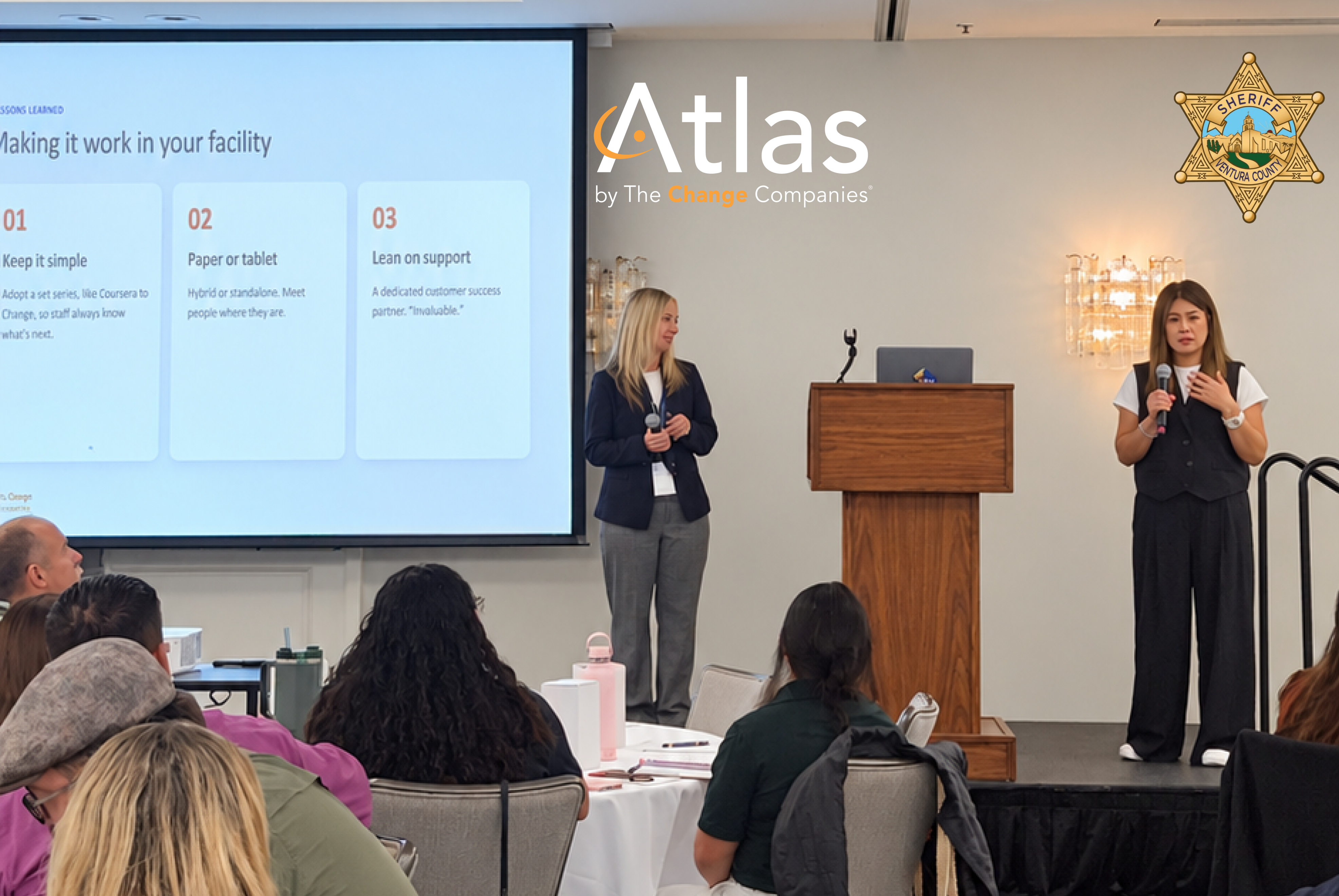
At the California Jail Programs Association (CJPA) Conference, Abigail Honorico, Program Administrator with Ventura County Sheriff's Office, and Amber Bollinger, Chief People and Operations Officer at The Change Companies, explored how correctional agencies can overcome some of these barriers through self-directed digital programming.
Their session, Reaching the Unreachable: Extending Behavior Change Programming Without Adding Staff or Disrupting Jail Operations, highlighted Ventura County's experience implementing Atlas, a digital platform that delivers evidence-based behavior change interventions through existing jail tablets.
Rather than focusing exclusively on technology, the presenters explored a more fundamental question: How can correctional agencies make meaningful programming available to people who otherwise might never have the opportunity to participate?
Reaching people who have traditionally been left out
In a jail environment, offering programming is rarely as simple as scheduling a class.
Classification restrictions determine who can be moved and who can participate together. Staffing shortages limit how many groups can be facilitated. Language barriers make certain curricula inaccessible. And individuals working in jail kitchens, laundry facilities and other operational assignments often have schedules that conflict with available classes.
For these reasons, many facilities prioritize programming for individuals approaching release, leaving others with limited opportunities for rehabilitation and skill development.
Abigail explained that Ventura County had experienced many of these same challenges. Although the agency had a long history of using The Change Companies' print Interactive Journals, classroom-based programming could reach only a portion of the population.
Atlas provided another way to deliver those interventions.
With programming available directly on jail tablets, participants can complete Interactive Journaling® exercises, watch educational videos and engage with other behavior change resources without needing to be transported to a classroom.
Abigail identified three populations that have particularly benefited from this approach:
-
Individuals in administrative segregation and protective custody, who often face significant restrictions on classroom participation. Abigail noted that some of these individuals have become her most engaged students precisely because they previously had so few opportunities.
-
Spanish-speaking participants, who can complete journals in Spanish without waiting for a bilingual instructor or the availability of translated print materials.
-
Individuals with jail work assignments, including kitchen and laundry workers, who can participate during available hours outside their shifts.
For those working during traditional classroom hours, Abigail compared the flexibility of Atlas to attending night school.The result is not necessarily a replacement for existing programming, but an opportunity to extend its reach to people who it has historically been difficult to serve.

Building programming around jail operations, not the other way around
One of Abigail's clearest messages was that successful implementation requires recognizing the realities of the correctional environment:"I can't buck the system. The jail has to run."
Jail operations, classification decisions and security requirements will always influence what programming is possible. Rather than trying to work around those priorities, Ventura County has adapted its digital programming model to fit within them.
That flexibility has been particularly important as the agency's needs have evolved.
Abigail described experimenting with different implementation approaches, including a hybrid model that combined classroom attendance with independent digital work. Over time, the agency moved toward a more standardized approach, assigning different Atlas curricula at its two jails based on the populations and needs at each location.
The agency also continues its existing classroom programming and partnerships with teachers. Atlas serves as an additional pathway for individuals who cannot access those opportunities.
The broader lesson for jail administrators is that expanding programming does not always require adding more classroom hours or personnel. Sometimes it means finding new ways to use the resources and technology already available.
Can risk flags become behavior change interventions?
Abigail described a participant who worked in the jail kitchen and completed his Atlas programming at night. During a journaling exercise, he expressed significant frustration toward a deputy working in the kitchen, including an aggressive thought that triggered a red flag in the platform.
Staff appropriately took the concern seriously, and there was discussion about removing the participant from programming.
But when Abigail reviewed his full Journal responses, she saw something important: the participant wasn't simply expressing anger. He was actively reflecting on his frustration, recognizing the potential consequences of acting on it and working through healthier ways to respond.
Rather than treating the flagged statement in isolation, Abigail shared the broader journaling context with custody leadership.
Her recommendation was to address the immediate safety concern without taking away the very programming that was helping the participant work through his behavior. "Don't pull him out of programs because it's working,” Abigail recalls saying. “He is working through his issues."
Digital tools can help bring important information to staff attention, allowing staff to interpret that information and make appropriate decisions.
Giving staff greater insight without adding to their workload
Amber expanded on this theme by demonstrating how Atlas supports the staff responsible for overseeing programming.
Through its dashboard, staff can view participant engagement, programming dosage, completed sessions and milestones without manually compiling information from individual paper Journals.
Automated flags can identify responses that may require attention, while progress summaries highlight positive changes, areas of concern and potential discussion topics for follow-up.
These insights are particularly valuable when staff are responsible for overseeing programming across large groups of participants.
For example, rather than reading every response across dozens of completed Journal pages before a meeting, a facilitator can review a summary identifying where a participant has demonstrated accountability, expressed motivation or struggled with a particular behavior.
The platform can also support group facilitation through built-in resources and session planning tools.
The objective is not to remove staff from the programming process, but to help them focus their limited time where it can have the greatest impact: engaging participants, responding to concerns and supporting positive behavior change.
Lessons learned
Abigail explained that when she first became involved in Atlas' early development, she envisioned participants using desktop computers to complete their programming. As jail technology evolved, the agency transitioned toward tablets.
Some approaches worked better than others. Ultimately, the agency developed a model that was easier to manage and better aligned with its facilities' different needs.
For other agencies considering digital programming, Abigail's experience offered several practical lessons:
-
Start with a manageable structure. Assigning a standardized series of Journals makes programming easier for staff to oversee and gives participants a clear path forward.
-
Use digital programming to complement existing services. Continue offering facilitated classes where they work well, while using self-directed resources to reach people who cannot participate.
-
Expect implementation to evolve. Different facilities, populations and operational needs may require different approaches. A successful model should be adaptable.
-
Make use of implementation support. Abigail emphasized the importance of having responsive support from The Change Companies as Ventura County refined its approach and addressed emerging needs.
Her experience also demonstrates the value of involving practitioners in technology development. Having participated in Atlas' early testing, Abigail was able to provide feedback based on the realities of operating programs inside a jail.
Expanding access without losing the human connection
The session closed with a broader message about what successful jail programming should look like.
Technology alone cannot eliminate staffing shortages, classification restrictions or the many competing priorities within a correctional facility. And it cannot replace the relationships that help people develop motivation, build skills and sustain positive changes. But it can help agencies reach individuals who might otherwise have little or no access to meaningful programming.
When implemented thoughtfully, digital programming can help staff identify emerging needs, recognize positive progress and connect individuals with relevant resources — all while respecting the operational demands of the jail environment.
See how Atlas works for your agency → Book a quick demo
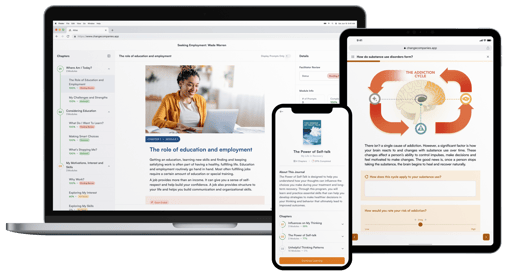
Evidence-based, behavioral health Interactive Journaling® curricula are available digitally on Atlas. Atlas can save staff time while supporting fidelity to evidence-based practices.
Ready to see what Atlas can do for your program? Visit our website to schedule a personalized demo today. Learn more about Atlas →
Provide your information below for a complete overview of Atlas for your setting.