


Surveys consistently show that people who pursue careers in helping professions, including criminal justice, mental health, substance use treatment and social services, place a high value on working directly with people, supporting their communities and making a positive impact. People in these professions often bring strong intrinsic motivation to their roles, yet they experience some of the highest rates of burnout. Large caseloads, staffing shortages and administrative demands can make workloads feel unmanageable.
Over time, the gap between why people chose the work and how they actually spend their time can grow wider.
Fortunately, there are ways to reduce time spent on tasks that not only consume hours but also contribute to burnout.
More time for what matters most
Community corrections, substance use treatment, counseling and social services share a common goal: to help individuals make positive changes that allow them to build healthier, more stable and productive lives.
Every part of these roles serves an important purpose. Documentation, reporting and data tracking help ensure accountability and continuity of care. But many professionals may feel that certain responsibilities are less connected to their sense of purpose than others. This is particularly felt when hours are spent completing paperwork instead of having meaningful interactions with the people they serve.
Imagine redirecting time spent on repetitive administrative tasks into activities that foster connection, personal growth and skill building. What could happen if professionals had more space to listen, mentor, teach and support?
10 extra hours a week… How?
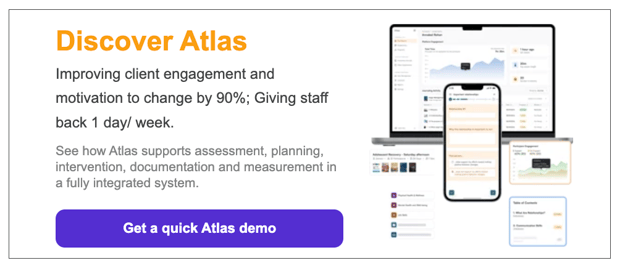
Digital tools like Atlas are designed to help optimize documentation, generate individualized insights and case notes based on participant progress and monitor outcomes through integrated applications.
By streamlining administrative tasks, staff at Midland County Adult Probation saved an estimated 10 hours per week, allowing them to focus more energy on direct engagement rather than data entry.
Similarly, counselors at Heartland House, a residential treatment program, reported greater flexibility to bring their own passions and strengths into programming by using Interactive Journaling® to deliver core curricula. Because session planning, reflection prompts and structured exercises are embedded within these self-paced materials, staff can spend less time preparing content and more time supporting participants as individuals. Heartland House staff used Atlas to improve treatment efficiency by 18% and created an entirely new mindfulness-based program with their time savings.
Efficiency provides an opportunity to reclaim your time.
What becomes possible with reclaimed time
If administrative work becomes lighter, professionals are able to reinvest that time. Here are just a few suggestions for in-person and mission-driven activities that could fill reclaimed time:
1. Offer more group therapy sessionsPeople under community supervision experience high rates of substance use and mental health challenges while often facing limited access to healthcare services. Additional group sessions can expand access to support without increasing caseload strain.
2. Hold employment skills workshops
Unemployment rates remain significantly higher for individuals with criminal records, hovering around 30%. Extra time could be used to run resume workshops, interview preparation sessions or partnerships with local employers.
3. Facilitate life skills programmingDeveloping soft skills like emotional regulation, teamwork and communication, as well as practical skills like financial literacy and digital competence, can help individuals build confidence and independence. These skills are often critical to whether someone successfully transitions into healthier routines and sustainable lifestyles.
4. Introduce wellness and resilience activitiesMindfulness exercises, creative expression, physical wellness activities or peer-support groups can help participants develop constructive coping strategies and reduce relapse or recidivism risks.
The possibilities also extend beyond programming. Extra time could mean more one-on-one conversations, collaboration with community partners or simply the ability to slow down enough to decompress and reset.
Time saved, mission re-engaged
Finding ways to increase efficiency and free up time for more human, face-to-face work serves everyone involved. Participants receive more meaningful engagement, communities benefit from stronger outcomes and professionals reconnect with the motivations that drew them to helping careers in the first place.
People are the ones who drive impact and lasting change. When technology is used strategically, helping professionals have more freedom to connect, guide and transform lives.
Ready to see what Atlas can do for your program? Let's schedule a personalized demo today. Learn more about Atlas →
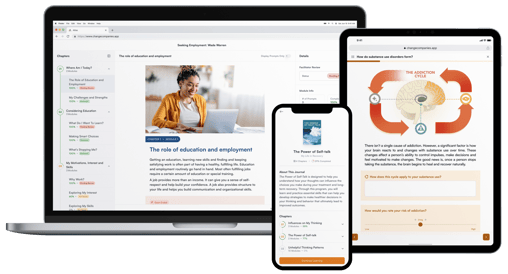
Evidence-based, behavioral health Interactive Journaling® curricula are available digitally on Atlas. Atlas can save staff time while supporting fidelity to evidence-based practices.
Provide your information below for a complete overview of Atlas for your setting.