

Probation officers wear many hats. They are coaches, accountability partners, case planners, facilitators and problem-solvers. Every day brings new challenges, from helping clients overcome barriers to success to responding quickly when someone may be at risk of relapse or recidivism. The challenge for POs isn’t just caseload management, it’s also ensuring that their interactions with clients are meaningful, effective and tailored to individual risks, needs and goals.
This is where Atlas can assist. By integrating intervention planning, progress tracking, session support and program delivery into a single platform, Atlas helps probation officers work more efficiently while improving outcomes for the people they serve.
Here's what a typical day might look like with Atlas.
Starting the day: building a personalized case plan
The morning begins with a meeting with a new client who has recently completed a risk-need assessment.
Using the assessment results, the officer can quickly identify interventions that align with the client's primary risks and needs using recommendation tools in Atlas to browse content for specific topics, setting or audience and risk factors. Whether the focus is substance use, anger management, employment readiness or building a prosocial lifestyle, the Atlas library houses content to fit the client's unique situation.
During the client's first session, the officer invites them to Atlas, helps them download the Atlas app and shows them how to navigate the platform. This helps the client feel comfortable and at ease using Atlas outside of session time.
Instead of creating a case plan from scratch, the officer collaborates with the client to build a roadmap for success. Together, they select goals and interventions that feel relevant and achievable. The result is a more personalized case plan and greater client buy-in from the very beginning.
Mid-morning: preparing for an ongoing client session
Later in the morning, the officer prepares for a meeting with a client they have been working with for several months.
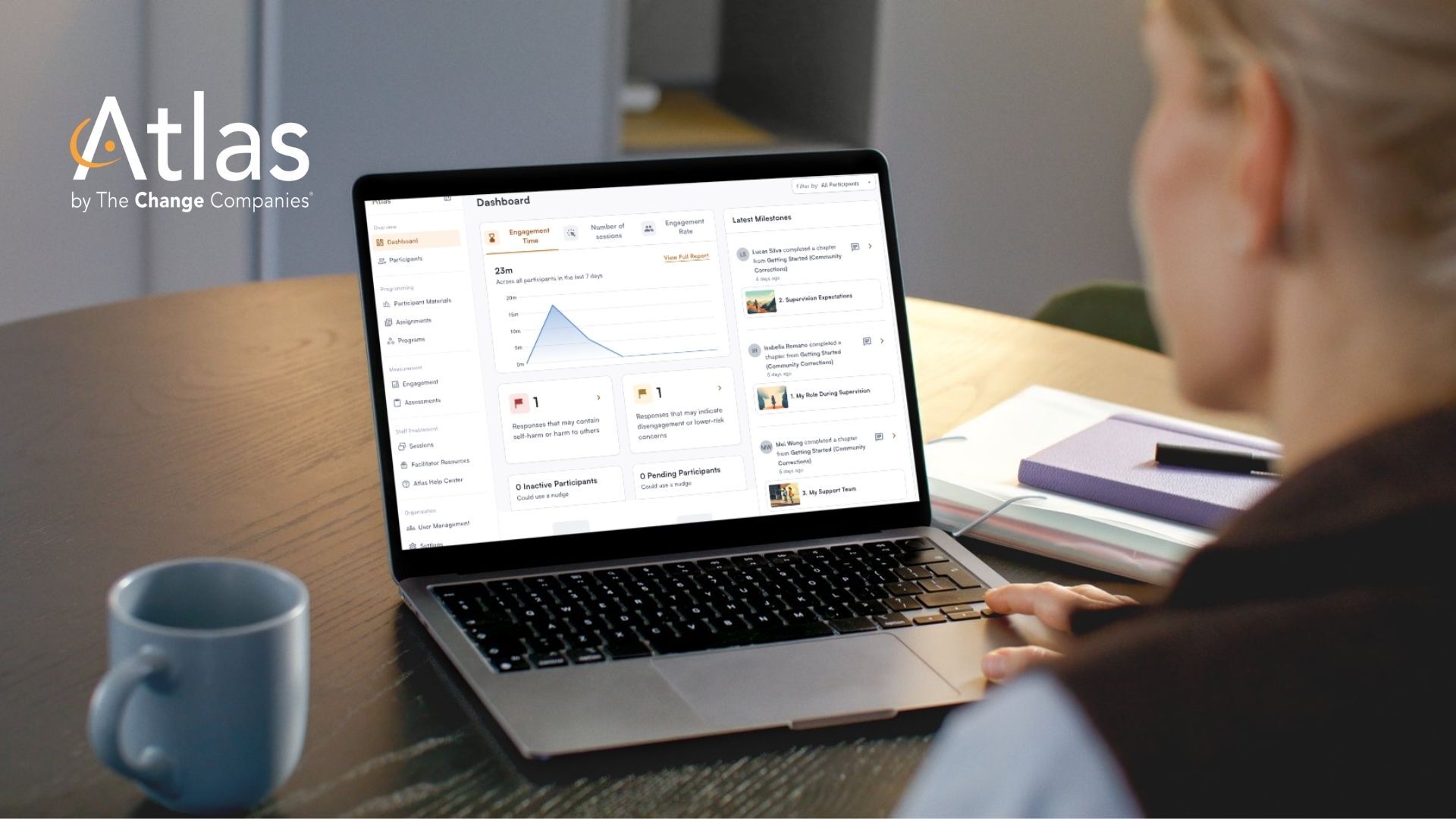
Rather than spending valuable time searching through case notes and trying to remember where things left off, the officer opens the Atlas dashboard and reviews the client's progress. They can quickly see completed assignments, time spent engaging with curriculum, key themes from previous interactions and any flagged responses where additional support or intervention may be needed.
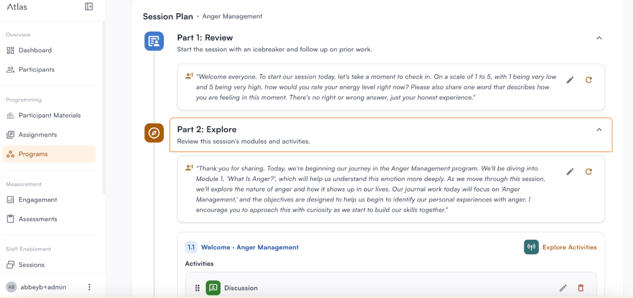
With this information at their fingertips, the officer creates a focused session plan tailored to the client's current stage of change and goals.

Afternoon session: better conversations, streamlined documentation
When the client arrives, the conversation focuses on progress, challenges and next steps.
With the client's consent, the officer uses Atlas's Sessions feature to transcribe the conversation in real time. This allows the officer to remain present and engaged instead of dividing their attention between listening and taking notes.
After the meeting, the Sessions feature helps identify key themes and discussion points that emerged during the session. These insights can guide future intervention assignments and may even reveal progress toward case plan goals that have already been achieved.
One of the biggest advantages of using Atlas is documentation efficiency and accuracy. Session notes are automatically drafted based on the conversation. The officer can review the notes, make any necessary edits, and easily transfer them into the agency's case management system.
Promoting continuous professional growth
To provide the most effective supervision, officers should continually improve their own skills.
After the session, the officer can review personalized feedback generated within Atlas. The platform highlights strengths and identifies opportunities for growth across a range of fidelity domains and core motivational interviewing skills.
This kind of feedback can be difficult to get consistently in an everyday supervision environment. Atlas provides ongoing coaching that helps officers refine their communication techniques, ask the right questions and deliver interventions more effectively. Over time, these small improvements can have a significant impact on client outcomes.
Staying proactive to reduce probation violations
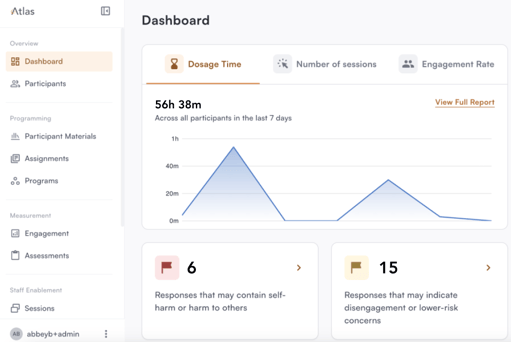
No two days in community supervision are the same. In the early afternoon, the officer receives an email notification from Atlas regarding a client who was not scheduled for a meeting that day. Based on the client's recent activity and engagement patterns, the platform has flagged a potential relapse trigger.
Rather than discovering the issue after a violation has happened, the officer has an opportunity to intervene proactively. A quick phone call can open a conversation, connect the client with resources and potentially prevent a setback from becoming a larger problem.
End of day: facilitating a CBT group with confidence
Later in the day, the officer leads a cognitive behavioral therapy (CBT) group.
Group facilitation requires preparation, organization and the ability to address the needs of multiple participants at once. Atlas simplifies this process through its Programs feature.
Before the group meeting, the officer reviews group-level themes and trends identified within the platform. Atlas then generates a structured session plan tailored to the group's current needs. The plan includes suggestions for discussion prompts, role-play activities, skill-building exercises and potential between-session assignments. Instead of spending hours prepping a plan from scratch, the officer can print the session guide and walk into the group room ready to facilitate meaningful conversations and learning experiences.
The bigger picture
Atlas helps probation officers do more of what they entered the profession to do, helping people make positive change in their lives.
For clients, that means engaging in activities that are tailored to their needs, receiving support when challenges arise and having opportunities to build the skills necessary for long-term success at their fingertips. For probation officers, it means a more efficient workflow, better insight into client progress and more confidence that every interaction has substance and is moving the client forward.
In a profession where time and resources are often limited, Atlas helps make every conversation, every intervention and every opportunity for change count.
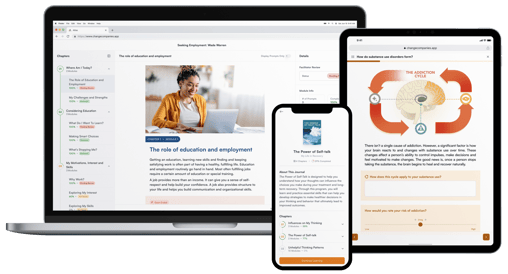
Evidence-based, behavioral health Interactive Journaling® curricula are available digitally on Atlas. Atlas can save staff time while supporting fidelity to evidence-based practices.
Ready to see what Atlas can do for your program? Visit our website to schedule a personalized demo today. Learn more about Atlas →
Provide your information below for a complete overview of Atlas for your setting.