


Kristin Dempsey’s latest book, Advancing Motivational Interviewing, co-written with colleague and friend, Ali Hall, makes important points about why Motivational Interviewing is an advancing skill. In this week’s Tips and Topics blog and in the article below, Kristin summarizes her points from the book on the importance of shifting perspectives when it comes to working with mandated clients in treatment settings.
One challenge we talk about in the book Advancing Motivational Interviewing is addressing people who are mandated to care. We do not have control over how someone is referred, but we can connect with the goals of engaging to move out of the stuckness that we can feel as providers when working in situations where we feel less control.
I am often asked how I manage mandated clients. First, I have a way of framing this for myself: most people are “mandated” to treatment. If not by the judge, social services agency, or the principal, then by a partner or another family member, or by grief, or by trauma. I notice such a reframe keeps me from seeing individuals in fundamentally different categories and in doing so, I can be more open in my acceptance of everyone who shows up instead of holding some secret (or not so secret) judgments based on how someone walked through the door. My job when engaging is to hear their story and find a way to help them focus on what is meaningful to them so we can explore change and growth. It is a good process, and good process leads to good outcome (Godin, 2020). Adopting such a reframe takes practice, and it’s a worthy effort as our judgments can influence how we see someone, which can result in poor practice. The benefit of not being focused on mandates is that I am more open and there is less pushback from clients who are not reacting to having their autonomy threatened and who will often open up more in session.
Having a mandate does not mean that we ignore context. I might still have a probation officer who wants to know if my client has shown up, and the client will likely have a court review, so, in collaboration with the client, I need to build a relationship with the officer. I will also oversee the release of information when I receive a message from family members requesting a consultation. I respond as the context demands, and I am still not overly focused on how they got to my door. The point is that they are in the door, and we are working on the tasks of MI together!
Honor and respect ambivalence. It is common to identify someone who has been compelled to treatment as being “difficult,” “resistant,” or “in denial,” but what if we see the person arriving as ambivalent? “They don’t want to be here, so they must not want to change” might be an inaccurate statement. Why? Because they are here. I like to remember that there is always something meaningful in their showing up; it might not feel like a great choice for them, but they are ultimately there to get something – freedom, support, clarity. I remember in the evoking stage that my job is just to be curious and help them unload their story. When I see my job as being a good person to talk to, and someone who can accept their stuckness, frustration, fear, and all the other difficult emotions that emerge, the tension often decreases.
The value of curiosity in addressing “stuckness”
In Motivational Interviewing, we are having conversations that ultimately help guide others toward change and growth. It appears our ability to reinforce a client’s change talk helps to generate more change talk, including mobilizing change talk that often leads to change behavior (Miller, 2023). We also know that someone can want to change and feel confident about change, but might not seem ready to change. Continued evocation seems to help with internal ambivalence, but what if the issue is not an individual’s motivation, but a real response to external pressures that maintain the status quo? Consider the following:
-
You discover someone that is “hard to engage” and will not return to the clinic is unhoused. When they come to the center, someone tells him that they cannot bring “all their stuff” into the waiting room. They have nowhere to keep their belongings, and they are afraid they will be stolen or thrown away if left outside. That’s why they don’t come to their appointments.
-
A client tells you they have to leave treatment early to care for their kids. Is it because they don’t want to continue being in a rigorous program structure and are unmotivated to maintain their agreed upon program goals or is it because the family members caring for their children texted them and said they have to leave and come pick up their kids?
-
You are working with a new client who is asking about seeing a doctor to obtain medications for attention deficit hyperactivity disorder (ADHD). There is a concern among staff that they might be seeking a stimulant medication and doing so would impact their recovery goals. After some inquiry, a counselor discovers they have been told they should have had a medical evaluation as a youth, and it was never arranged because they had no access to care. As an adult, they continue to wonder if an untreated neurological issue is part of why they have always had difficulty with focus.
Each of these examples provides opportunities for the practitioner to assume good intent and explore options with the client. When addressing these external factors, we use the micro-skills of Motivational Interviewing – open ended questions, affirmations, reflections, and summaries – and we also recognize the importance of advocacy, linkage, and policy change. A key to understanding individual change is to have a larger picture of a person’s history as it shapes the current behavior. Collecting history as an information gathering exercise is not useful. Thoughtfully collecting history over time and understanding how history and current events impact a person’s behavior is a critical part of effectively working with a change process. Not understanding why anyone behaves how they do can lead to inaccurate and misleading assumptions. Tapping into our own curiosity helps us see how someone fits into their world.
Read the entire April/May blog on David Mee-Lee's Tips & Topics here →
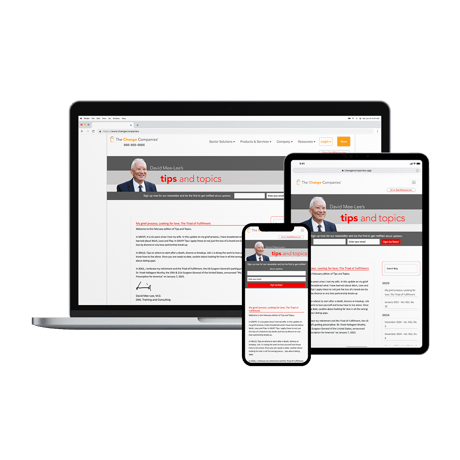
Authored by Dr. David Mee-Lee, “Tips & Topics” is a monthly blog covering three sections: Savvy, Skills and Soul, with additional sections varying from month to month. Topics include Stump the Shrink, Success Stories and Shameless Selling.

Evidence-based, behavioral health Interactive Journaling® curricula are available digitally on Atlas. Atlas can save staff time while supporting fidelity to evidence-based practices.
Ready to see what Atlas can do for your program? Visit our website to schedule a personalized demo today. Learn more about Atlas →
Fill the form to learn how Atlas accesses the journals and use these tools to improve staff efficiency: